On September 23, 2024, a vibrant community of automation enthusiasts gathered in London for an insightful Ansible DevTools meetup. The event, aimed at showcasing the latest advancements in Ansible development tools, brought together developers, engineers, and tech enthusiasts eager to explore new features and capabilities.
Key Highlights
The meetup featured a series of presentations by Ansible developers, highlighting new tools and updates planned for Q4 2024. A diverse audience engaged actively with the content, with many capturing the moment through photos and taking notes on their devices.
1. Introduction to Ansible DevTools
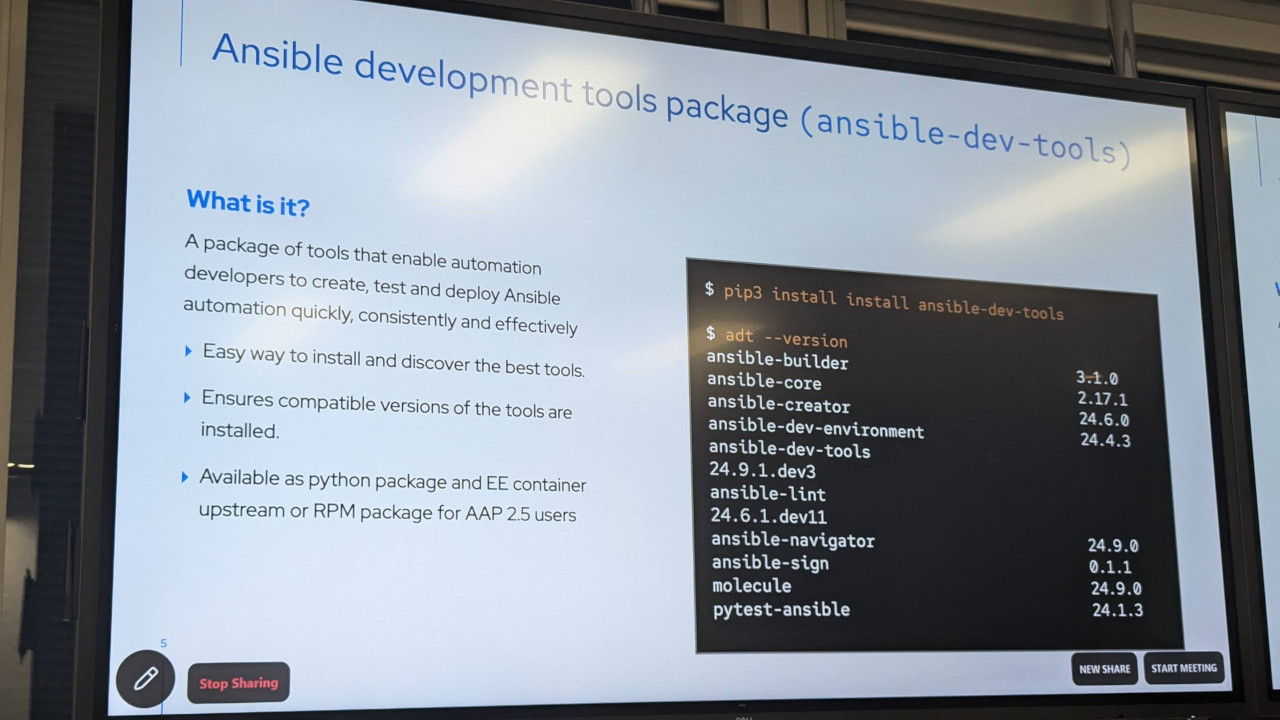
The session commenced with an introduction to the Ansible DevTools ansible-dev-tools package. The speaker presented an overview of the package, designed to facilitate automation developers in creating, testing, and deploying Ansible automation quickly and efficiently. The package promises to ensure the installation of compatible tool versions and is available as a Python package and an EE container upstream or RPM package for AAP 2.5 users.
2. Molecule 6 – A Refined Test Runner
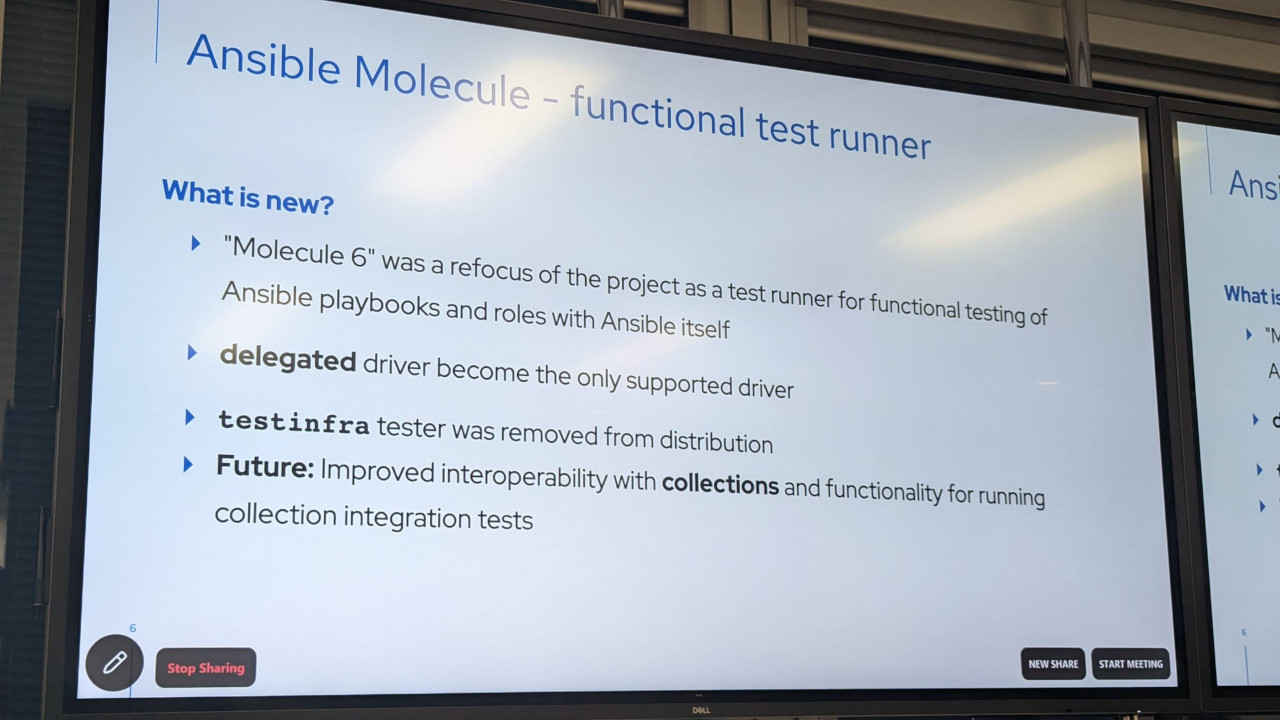
The presentation on Ansible Molecule 6 revealed a significant refocus of the project as a functional test runner for Ansible playbooks and roles. With the introduction of the 'delegated' driver as the only supported driver and the removal of the 'testinfra' tester from the distribution, Molecule 6 aims to improve interoperability with collections and support integration tests.
3. Ansible VS Code Extension
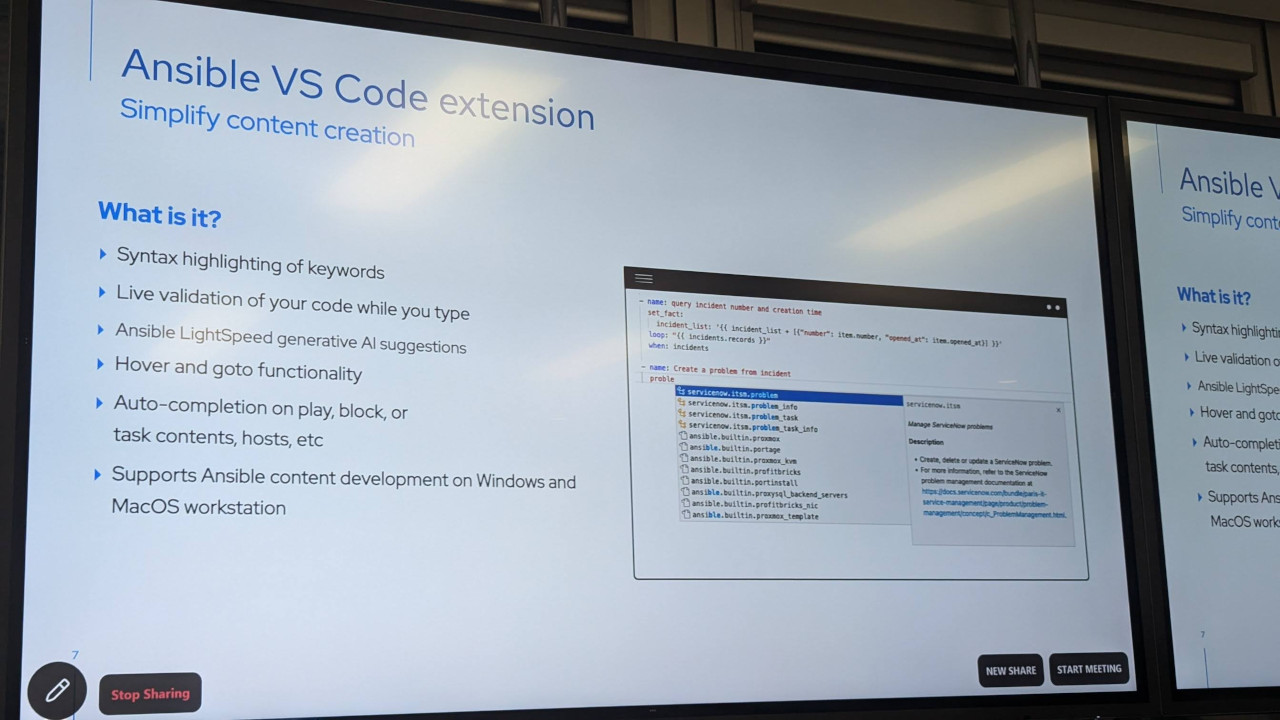
The Ansible VS Code extension is set to enhance content creation significantly. The extension offers syntax highlighting, live validation, and AI-powered suggestions from Ansible LightSpeed. The tool supports Ansible content development on both Windows and macOS, featuring auto-completion, hover, and go-to functionalities to simplify the coding process.
4. Ansible Content Actions with GitHub
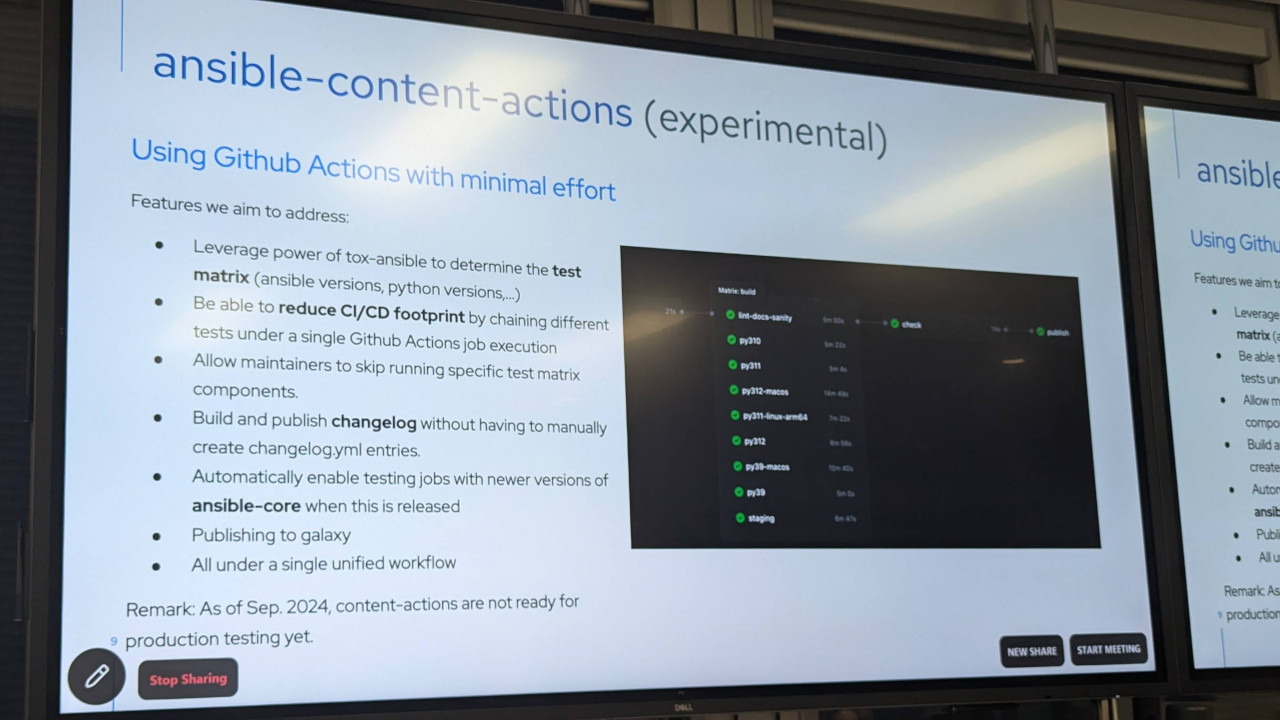
Ansible-content-actions, currently in an experimental phase, is being developed to leverage GitHub Actions for testing and automation. The tool aims to minimize CI/CD footprints by chaining different tests under a single job execution, automating changelog publishing, and reducing the manual creation of changelog entries. The community is eagerly anticipating its stable release, expected to streamline workflows significantly.
Community Engagement
The meetup was more than just a series of presentations; it was a platform for the Ansible community to engage, share ideas, and network. Throughout the event, attendees were seen engaging with the speakers, taking notes, and discussing the new features among themselves.
One attendee shared his enthusiasm for the updates, particularly the integration of AI-powered suggestions in the VS Code extension. "It’s exciting to see how Ansible is evolving, making automation even more accessible and efficient for everyone," he remarked.

Looking Forward
The meetup concluded with an interactive Q&A session, where the audience had the opportunity to delve deeper into the new features and provide feedback directly to the Ansible team. The event wrapped up with a sense of anticipation for the upcoming releases and the continuous improvement of Ansible tools.
For more information on the Ansible DevTools team and their projects, the community is encouraged to visit ansible.readthedocs.io/projects/team-devtools/ and to engage in discussions on the Ansible forum using the #devtools tag.

Final Thoughts
The London Ansible DevTools meetup was a successful event, reinforcing the strong community around Ansible and showcasing the continuous innovation in the automation space. With tools becoming more robust and user-friendly, Ansible is set to remain a pivotal player in the automation landscape, empowering developers to create and manage automation with greater ease and precision.